Heat Pump Emergency Repair in East Central Indiana
Heat pump emergency repair in East Central Indiana. Frozen, noisy, or dead unit? Get expert diagnosis and fast service. Call today!
Is Your Heat Pump Frozen Solid, Screeching, or Completely Dead?
Is your heat pump encased in thick ice, making a violent metal-on-metal grinding noise, or blowing completely cold air while your thermostat is calling for heat? These are critical mechanical failures that will not fix themselves and require immediate professional intervention before the compressor destroys itself entirely. Hometown Heating & Cooling is standing by to dispatch a technician to diagnose and resolve your heat pump emergency right now.
Warning Signs You Have a Heat Pump Emergency
When your heat pump begins to fail, it rarely does so quietly. Pay attention to these critical operational red flags that require immediate professional diagnosis.
Solid Ice Formation on the Outdoor Coil
If your outdoor unit looks like a block of ice and the automatic defrost cycle is failing to activate, the system is suffocating and cannot absorb heat from the outside air. This usually points to a failed reversing valve, a dead defrost control board, or a severe refrigerant leak that drops the coil temperature below freezing. Continuing to run an iced-over unit forces the compressor to pump liquid refrigerant instead of vapor, which will quickly destroy the internal valves.Violent Grinding or Metal-on-Metal Screeching
Heat pumps produce a steady, predictable hum during normal operation, but a harsh screeching or grinding noise means heavy internal components are tearing themselves apart. This is frequently caused by a failing fan motor bearing dropping the fan blade into the metal shroud, or a scroll compressor struggling against extreme head pressure. You must shut the system down at the thermostat immediately when you hear these noises to prevent total, irreversible system destruction.Stuck in the Wrong Operating Mode
When your vents blast hot air while you are trying to cool the house, or freezing cold air when you need heat, the system has lost its mechanical ability to switch operations. This almost always means the reversing valve is physically jammed inside the piping or the magnetic solenoid coil powering it has burned out. Because the system cannot reverse the flow of refrigerant, it becomes completely useless for your current comfort needs and requires an electrical and mechanical diagnostic.Constant Tripping of Your Electrical Breaker
If resetting the breaker only results in another immediate, aggressive trip the second the heat pump kicks on, you have a dead short somewhere in the high-voltage system. Continuing to flip the breaker forces massive electrical current into a grounded compressor winding or a melted contactor, which can easily start an electrical fire inside the cabinet. A tripped breaker is a safety mechanism doing its job, telling you that a major electrical component has catastrophically failed.Rapid Short Cycling and Hard Lockouts
A unit that turns on, runs for sixty seconds, and abruptly shuts down is trapped in a short cycle and may eventually enter a hard lockout where it refuses to run at all. This safety mechanism triggers when the internal sensors detect dangerously low suction pressure, extreme discharge temperatures, or an overheating fan motor. The system is intentionally shutting itself down to save the compressor from burning out, meaning you need a technician to clear the fault and fix the underlying cause.Common Causes Behind Heat Pump Breakdowns
Heat pumps are complex refrigeration systems that run constantly, making them susceptible to specific mechanical and electrical failures.
Catastrophic Refrigerant Blowouts
Unlike a slow, microscopic leak, an emergency blowout happens when a pressurized copper line rubs against the cabinet until it splits, or a factory braze joint fails completely under vibration stress. The system instantly loses its entire charge, eliminating its ability to move heat and causing the low-pressure safety switches to trip to prevent the compressor from running dry. Fixing this requires locating the rupture, brazing in new copper under a nitrogen sweep, pressure testing the system, and pulling a deep vacuum before recharging.Melted Contactors and Blown Capacitors
The electrical components in your outdoor cabinet endure extreme voltage spikes and brutal weather, eventually causing the contactor points to pit, arc, and weld shut. Similarly, the dual run capacitor can overheat, swell, and burst, stripping the fan motor or compressor of the torque it needs to start. When these components fail, the system either loses power entirely or receives a continuous, unregulated surge of electricity that can destroy the compressor windings.Failed Defrost Control Boards and Sensors
Your heat pump relies on a sensitive outdoor circuit board and specific thermistors to detect frost accumulation and trigger the defrost cycle to melt it away. When a power surge shorts out this board or a sensor drifts out of calibration, the unit will blindly continue running in standard heating mode while accumulating inches of solid ice. This completely blocks airflow across the outdoor coil, dropping the system's efficiency to zero and putting extreme mechanical strain on the fan blades.Seized Indoor Blower Motors
The indoor air handler must continuously push conditioned air through your ductwork for the refrigeration cycle to function properly. If the blower motor seizes up from worn bearings or a burnt-out ECM module, the indoor coil will freeze solid in cooling mode or trip the high-limit switches in heating mode. The outdoor unit will continue to pump high-pressure refrigerant against a system that cannot distribute the air, leading to rapid component failure.Failing Thermal Expansion Valves (TXV)
The thermal expansion valve precisely meters the flow of liquid refrigerant into your indoor coil based on the temperature of the suction line. If this valve sticks closed due to internal debris or a lost bulb charge, the system becomes starved for refrigerant and will immediately trip the low-pressure switch. Diagnosing a bad TXV requires checking the superheat and subcooling simultaneously to prove the valve has mechanically failed before replacing it.What to Expect During Your Emergency Service Visit
When you call us out for an active heat pump failure, we arrive ready to troubleshoot the exact electrical or mechanical fault stopping your system. We do not guess or throw parts at the problem; we hook up our digital manifold gauges to check the operating pressures, test the capacitors with a microfarad meter, and measure the amp draw on your compressor. This rigorous diagnostic process tells us exactly what component failed, why it failed, and whether it caused collateral damage to the rest of the refrigeration circuit.
Once we isolate the dead component, we walk you through exactly what we found and what it takes to get the system running safely again. We carry a wide range of universal and Heil-specific replacement parts on our trucks, allowing us to swap out bad contactors, swollen capacitors, and seized fan motors right then and there. If the failure involves a major component like a grounded compressor or a ruptured reversing valve, we lay out the exact costs and timeline so you can make an informed decision without high-pressure sales tactics.
As a veteran-owned and family-operated team, Hometown Heating & Cooling treats your property with respect and your emergency with the military precision it deserves. We test the system thoroughly after the repair is completed, verifying the temperature split at the supply vents and ensuring the defrost cycle activates properly before we ever pack up our tools. Our goal is to leave you with a reliable, functioning heat pump and the peace of mind that the job was done correctly the first time.
Heat Pump Emergency Repair Coverage Across East Central Indiana
Our dispatchers route elite technicians across the entire East Central Indiana region to resolve critical heat pump failures quickly and professionally.
Muncie Area: Albany, IN, Eaton, IN, Farmland, IN, Gaston, IN, Muncie, IN, Parker City, IN, Yorktown, IN
Anderson Area: Alexandria, IN, Anderson, IN, Chesterfield, IN, Daleville, IN, Elwood, IN, Fortville, IN, Frankton, IN, Lapel, IN, Markleville, IN, Middletown, IN, Pendleton, IN, Summitville, IN
Outlying East Central Indiana: Fowlerton, IN, Hartford City, IN, Marion, IN, New Castle, IN, Upland, IN
Related Services
If your system has suffered a catastrophic compressor failure and a repair is no longer financially viable, we can guide you through a complete heat pump installation to get a modern, efficient unit in place. We also provide routine heat pump maintenance to catch failing electrical components, clean dirty coils, and correct low refrigerant levels before they turn into midnight emergencies.
Stop Freezing and Get Your Heat Pump Fixed Today
A dead heat pump will not fix itself, and waiting only forces your home's temperature further into the danger zone while putting your property at risk. You need an experienced technician to diagnose the electrical or mechanical failure, replace the burnt-out components, and restore your airflow immediately.
Do not let a failing system compromise your family's comfort or safety for another minute. Hometown Heating & Cooling is ready to dispatch an expert to your door to resolve the issue right now. Reach out to contact our emergency repair team today and we will get your system back online.
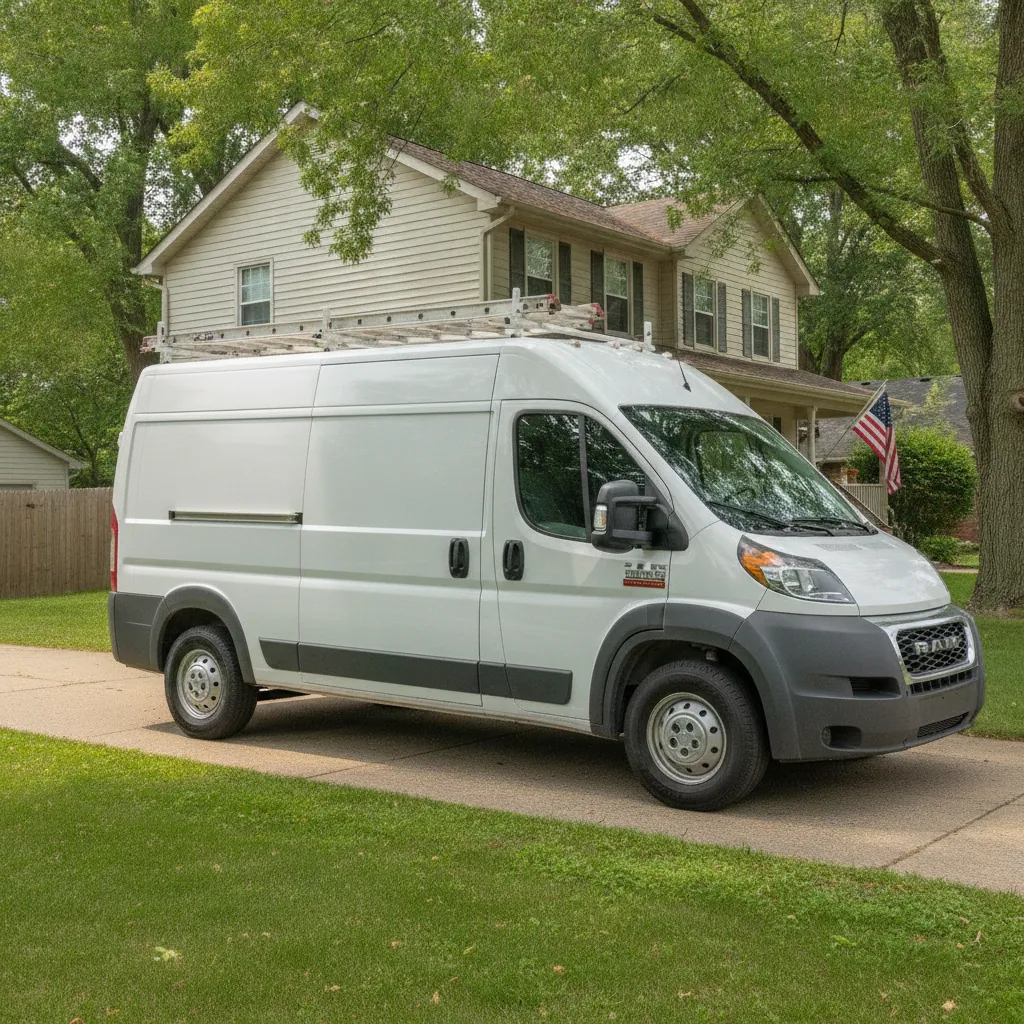
Service in Hours, Not Days
Free estimates on new systems and fast, reliable service from your local Hometown team.