Insulation Services
Restore comfort and lower energy bills with expert insulation services in Muncie Metro. Stop drafts and uneven temperatures.
Is Your Muncie Metro Home Always Drafty, Battling Uneven Temperatures, or Driving Up Your Energy Bills?
If you're constantly adjusting the thermostat, dealing with cold spots in winter or sweltering rooms in summer, or watching your utility costs climb, these aren't just minor inconveniences—they're clear indicators of a problem that needs professional attention. At Hometown Heating & Cooling, we understand these frustrations, and our team is ready to help restore comfort and efficiency to your home.
The heavy, stagnant air hits you the moment you walk into an uninsulated attic in July, or the biting cold draft sweeps across your living room floor in January. These aren't just discomforts; they're symptoms of a failing thermal envelope, and in Muncie Metro, that means your home's insulation isn't doing its job. We’ve seen hundreds of homes across Albany, Alexandria, and Anderson struggle with these exact issues, often leading to bigger HVAC problems down the line.
Insulation Services for Muncie Metro Homeowners
Your home's insulation is its primary defense against the Muncie Metro's extreme swings in temperature, from our humid, scorching summers to our brutally cold, often windy winters. When this critical barrier fails, your HVAC system has to work overtime, leading to higher energy bills, inconsistent comfort, and a general feeling of unease in your own home. We don't just guess at the problem; we get into your attic, crawl space, and wall cavities to find the root cause.
Over time, insulation can settle, become compressed, or get damaged by moisture from leaks or unwelcome pests. This significantly reduces its R-value, which is its ability to resist heat flow. Many older homes in the Muncie Metro area, built before modern energy efficiency standards, simply lack the necessary R-value to keep up with today's demands. What might have been adequate decades ago is now a gaping hole in your home's thermal defense, costing you money every single day.
Common Signs Your Insulation is Failing:
- Uneven Room Temperatures: Some rooms are always colder or hotter than others.
- High Energy Bills: Your heating and cooling costs are unexpectedly high for your usage.
- Drafts: You feel cold air currents even when windows and doors are closed.
- Ice Dams: In winter, ice builds up on your roof edges, indicating heat loss from the attic.
- Pest Infestations: Rodents or insects have made a home in your attic or walls, damaging insulation.
- Visible Settling or Damage: Insulation in your attic looks thin, wet, or has bare spots.
- Excessive Noise: You hear more outside noise than you used to.
When we arrive, we perform a thorough diagnostic inspection. This isn't just a quick look; we're checking for air leaks around light fixtures, poorly sealed attic hatches, and compressed insulation in knee walls. We're looking for signs of moisture damage that might require Attic Ventilation Services first, or evidence of past pest activity that needs to be addressed before new material goes in. We’ve seen it all, from DIY fixes gone wrong to completely missing sections of insulation in critical areas.
Once we've pinpointed the exact issues, we'll discuss the most effective and durable solutions. This could involve adding blown-in cellulose or fiberglass to bring your attic up to current R-value standards, or meticulously sealing critical air leaks that bypass existing insulation entirely. For hard-to-reach areas or specific thermal bridging problems, we might recommend spray foam insulation, which creates an incredibly effective air and thermal barrier. Our goal is to create a complete, high-performing thermal envelope that reduces the workload on your heating and cooling systems, saving you money and improving your comfort year-round. Compare your current situation against our comprehensive Insulation Services to see how we tackle these challenges across Muncie Metro.
How Much Insulation Your Home Actually Needs
East Central Indiana sits in climate zone 5, which is cold enough that the Department of Energy's recommendations here are near the top of the national range. Most homes we open up fall well short of them, and the attic is almost always the biggest gap.
- Attic: roughly R-49 to R-60. In blown cellulose that is about fourteen to eighteen inches of settled depth. If you can see the tops of your ceiling joists, you are nowhere near it.
- Walls: roughly R-13 to R-21 in the cavity. Existing walls are rarely worth opening, but empty or settled cavities can usually be dense-packed from outside or from the interior with small access holes.
- Floors over unconditioned space: roughly R-25 to R-30, which matters for rooms over a garage or an open crawl space.
- Crawl space walls: roughly R-15 to R-19 where the crawl is sealed and conditioned rather than vented.
- Rim joist: the band of framing where the floor meets the foundation. It is small, frequently bare, and one of the most cost-effective square footages in the entire house.
A tape measure in the attic answers most of this in five minutes. Depth alone is not the whole story — compressed, displaced or moisture-damaged material does not deliver its rated R-value — but it tells you immediately whether you are in the conversation.
Where Homes in Our Area Lose the Most Heat
Heat does not leave evenly. It leaves through a handful of predictable places, and in the housing stock around Yorktown, Muncie and Anderson we find the same offenders over and over.
- The attic hatch or pull-down stairs. Usually a thin uninsulated panel sitting in an unsealed frame — a hole in the middle of an otherwise insulated ceiling.
- Top plates and interior wall cavities. Where interior walls meet the attic, open stud bays act like chimneys carrying warm air straight up.
- Recessed can lights. Older housings are not rated for insulation contact and leak air continuously into the attic.
- Plumbing and wiring penetrations. Every pipe and cable through the ceiling plane is a gap unless somebody sealed it.
- The rim joist. Often completely bare in basements, and directly exposed to outdoor temperature.
- Knee walls in finished attics and bonus rooms. Frequently insulated on the wall but open behind and underneath, so air moves around the insulation instead of being stopped by it.
- Ductwork in unconditioned space. Supply runs through a vented attic or crawl lose heat before the air ever reaches a register. That is a duct sealing problem as much as an insulation one.
Ice dams are the visible version of this. When warm air escapes into the attic, it melts snow on the upper roof, the water runs down to the cold eave and refreezes. The ice is the symptom; the air leak is the cause, and adding insulation without stopping the leak often makes dams worse rather than better.
Air Sealing Comes First
Insulation slows heat moving through materials. It does very little about heat riding on moving air. If a house has significant air leakage, blowing more material on top of it buries the problem without solving it, and you pay for insulation that cannot perform.
So we seal first: the attic hatch, top plates, penetrations, can lights, the rim joist, and the gaps around chimneys and ductwork. It is unglamorous, it is usually the cheaper half of the job, and it is the half that changes how the house feels. Sealing also protects the insulation itself, because the moisture that rides along with escaping air is what compresses and ruins it.
One caution: sealing changes how a house breathes. A home with combustion appliances needs adequate combustion air, and a house tightened significantly may need deliberate mechanical ventilation to keep indoor air quality where it should be. We check that before we tighten, not after.
Insulation Types and Where Each Makes Sense
Blown cellulose
Recycled paper treated for fire and pest resistance, at roughly R-3.2 to R-3.8 per inch. It fills irregular spaces well and dense-packs into closed wall cavities. Our usual recommendation for attic top-ups in older homes.
Blown fiberglass
Roughly R-2.2 to R-2.7 per inch, so it needs more depth for the same R-value. It does not absorb water the way cellulose can, which makes it a reasonable choice where some moisture risk remains.
Fiberglass batts
Roughly R-3.1 to R-3.4 per inch. Batts only perform when cut precisely and installed without gaps or compression, which is exactly where most existing batt work fails. Best suited to open, regular framing.
Open-cell spray foam
Roughly R-3.5 to R-3.7 per inch, and it air-seals as it expands. Useful on complex roof lines and knee walls where stopping air movement matters as much as R-value.
Closed-cell spray foam
Roughly R-6 to R-7 per inch, and it resists moisture. The right answer for rim joists, crawl space walls and tight spaces where there is not enough depth for anything else. It is the most expensive option per square foot, so we use it where its properties earn the cost.
Rigid foam board
Used on foundation and crawl space walls and to break thermal bridging at the rim joist. Often paired with another material rather than used alone.
Most homes end up with a combination — sealing and blown material in the attic, closed-cell at the rim joist, and attic ventilation corrected so the whole assembly stays dry.
Our Approach to Home Comfort Solutions
At Hometown Heating & Cooling, our process is rooted in the discipline and integrity our veteran owner learned in the U.S. Army, combined with the personal touch of a family-owned business. When you reach out to us with an insulation concern, you can expect a professional, courteous technician to arrive promptly at your Muncie Metro home, ready to provide a thorough, hands-on diagnostic inspection. We believe in getting to the root cause, not just treating symptoms.
We won't just tell you what's wrong; we'll show you, explaining our findings in clear, understandable language, free of confusing technical jargon. Before any work begins, you'll receive a transparent, upfront explanation of the recommended solutions, the entire process involved, and a straightforward, no-pressure estimate. There are never any hidden fees or surprise charges when you work with us.
Our technicians are fully licensed, continuously trained, and deeply committed to delivering the highest quality workmanship, whether it’s meticulously sealing air leaks or expertly installing new insulation. Once the job is complete, we make sure the work area is left spotless, reflecting our respect for your home and our unwavering commitment to professional service. Our focus is always on providing lasting solutions that genuinely enhance your home's comfort and energy efficiency, earning your trust as your go-to HVAC and insulation experts throughout the Muncie Metro area.
Related Services for Complete Home Comfort
Insulation is a foundational element of your home's energy efficiency and comfort, but it's part of a larger system. Often, insulation issues are intertwined with other aspects of your home's HVAC system and thermal envelope. For example, if your insulation is struggling, it can put significant strain on your Heating Installation or Air Conditioning Installation equipment, leading to premature wear and tear or higher operating costs.
Even the best insulation can't fully compensate for significant air leaks or poorly sealed ductwork. That's why we frequently recommend services like Duct Sealing to ensure your conditioned air reaches its intended destination without loss. Furthermore, proper Attic Ventilation is absolutely critical to prevent moisture buildup and maintain the long-term effectiveness of your insulation, especially with our region's fluctuating temperatures and humidity. Addressing these related areas together often provides the most comprehensive and lasting improvements to your home's comfort and energy savings.
Frequently Asked Questions About Insulation
Can I just add new insulation on top of what is there?
Usually yes, and blown material over existing batts is common. The exceptions matter though: if the existing insulation is wet, moldy, rodent-contaminated or hiding unsealed penetrations, it comes out first. Burying a problem is not an upgrade.
How do I know whether my attic has enough?
Measure the depth and compare it against the fourteen-to-eighteen inch range for zone 5. If insulation is level with or below the joists, you have roughly a third of what current guidance calls for.
Will insulation lower my energy bill?
In a home that is genuinely under-insulated and leaky, it is one of the few improvements where homeowners reliably notice a difference — in the bill and in how even the house feels. We will not put a percentage on your house without seeing it, because the honest answer depends on where you are starting from.
Is spray foam always the best option?
No. It has the highest R-value per inch and it air-seals, which makes it the right tool for rim joists, crawl walls and shallow cavities. For an open attic floor it is usually far more expensive than sealing properly and blowing cellulose to full depth, for the same result.
Does more attic insulation mean I should close the roof vents?
No, and this is a common and costly mistake. A vented attic needs its airflow to stay dry. Blocking soffit vents with blown material traps moisture, and that is how you get damp insulation, mold and rotted sheathing. Baffles keep the path open at the eaves.
What about my crawl space?
Older vented crawl spaces in this area tend to be humid most of the summer. Sealing and conditioning the crawl, with insulation on the walls rather than the floor above, usually performs better and takes a persistent moisture source out of the house.
How long does the work take?
A typical attic air-seal and top-up is a one-day job. Larger homes, crawl space work, or anything requiring removal of contaminated material runs longer, and we will give you the schedule before we start rather than during.
Will this help in summer too?
Yes. An uninsulated attic in July runs far hotter than outdoor air, and that heat drives down into the living space all afternoon and evening. Insulation works in both directions, and homes often notice the summer improvement first.
Get Lasting Comfort for Your Muncie Metro Home
Don't let persistent drafts, uneven temperatures, or skyrocketing energy bills continue to compromise the comfort and efficiency of your Muncie Metro home. If you're tired of battling the elements indoors, it's time to connect with the experts who understand both the science of thermal envelopes and the specific climate challenges of our region. Reach out to Hometown Heating & Cooling today and let us help you restore true comfort and efficiency to your home. Contact us to schedule an assessment.
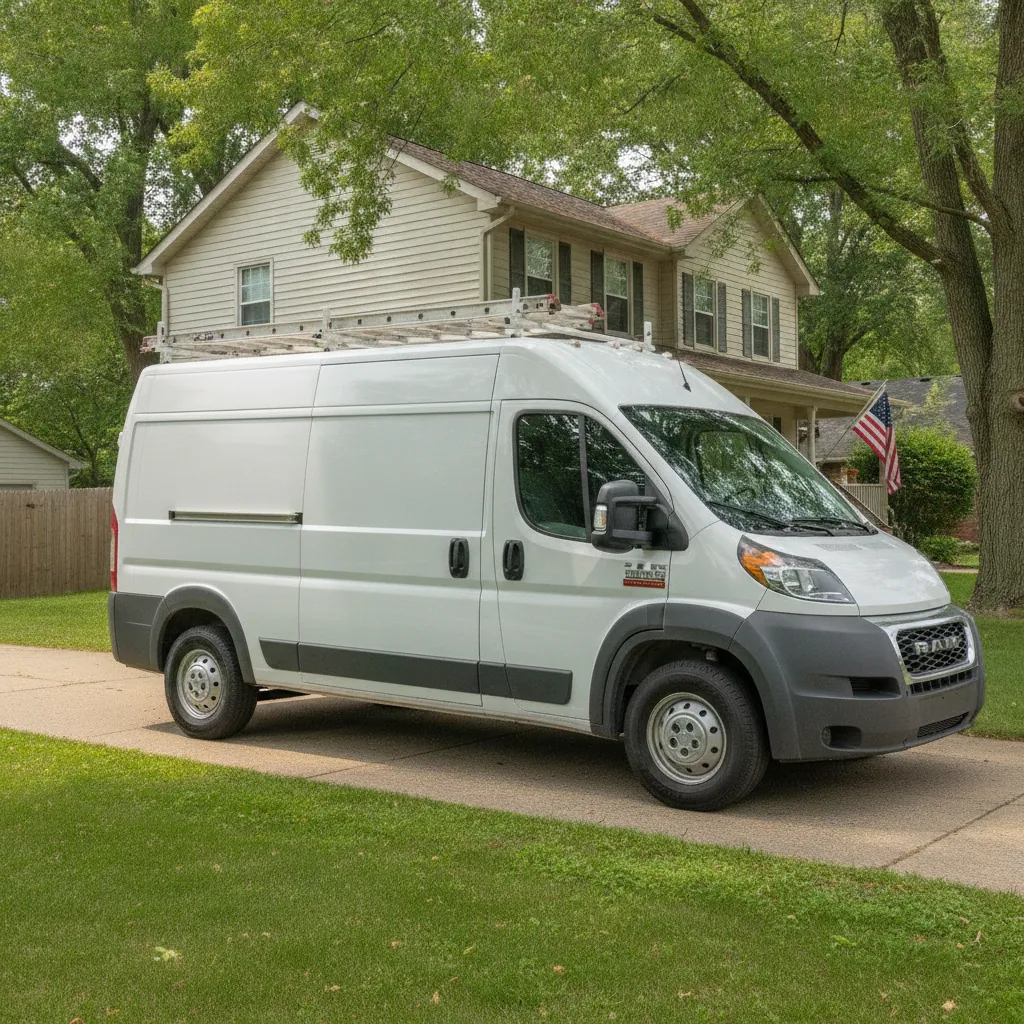
Service in Hours, Not Days
Free estimates on new systems and fast, reliable service from your local Hometown team.